
 01.10.2026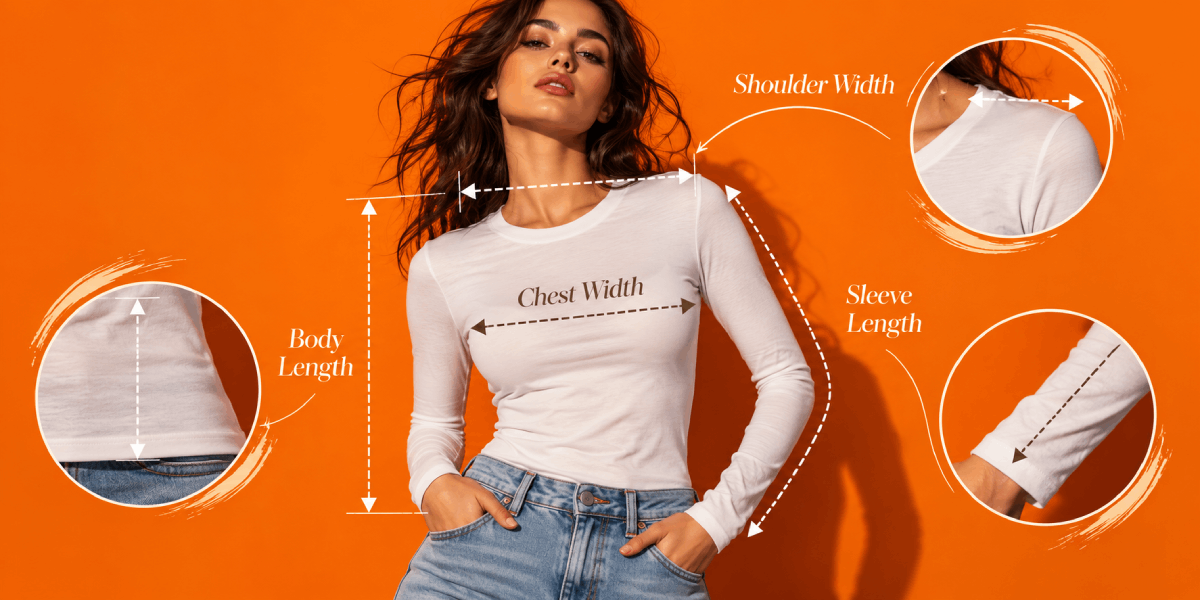
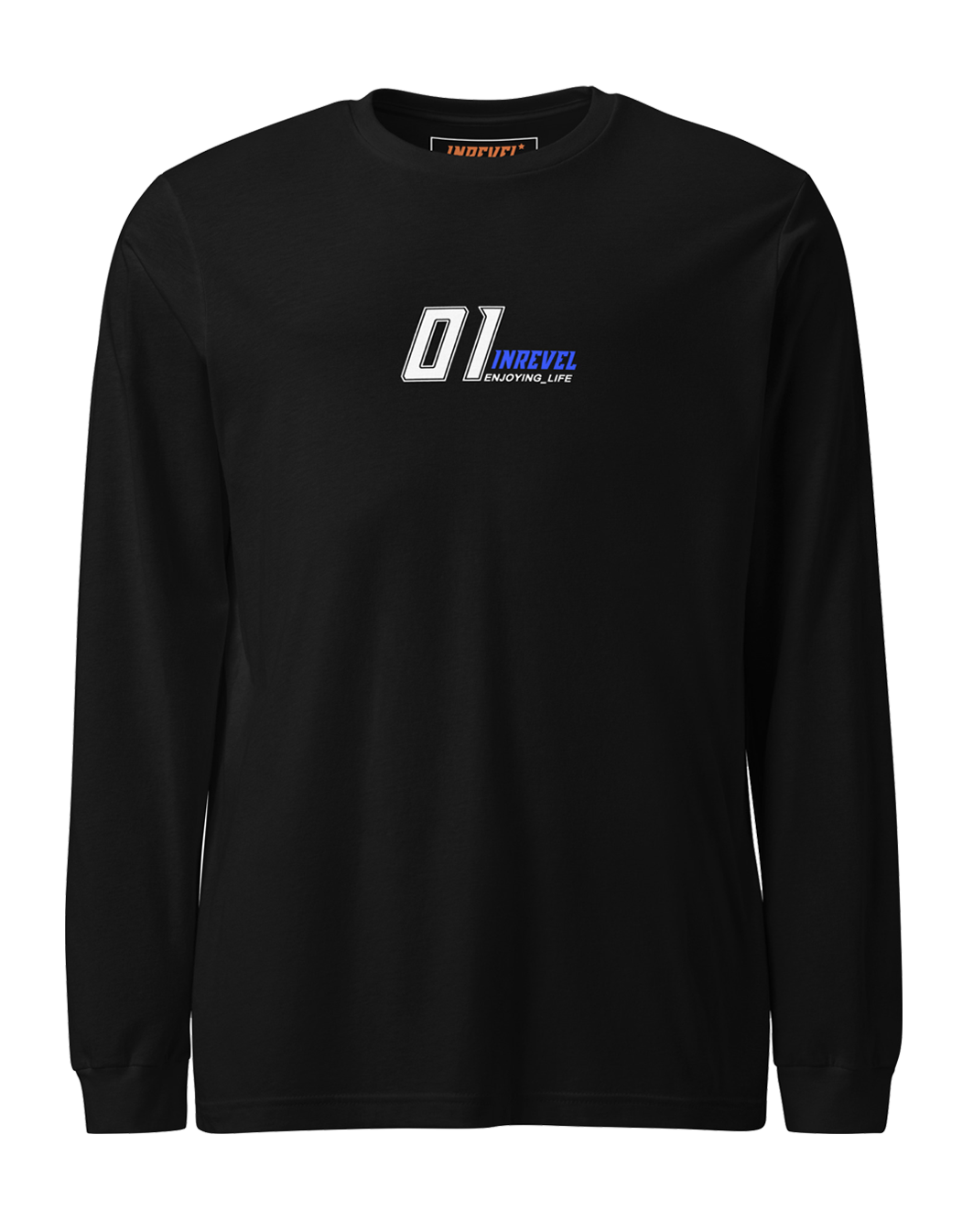
If you want a long sleeve T-shirt to fit well, measuring a tee you already own is often more reliable than guessing between S, M, L or XL.
You only need a flat surface, a soft measuring tape and a shirt that already fits you the way you like.
What Measurements Do You Need?
The most useful measurements are:
- Chest width
- Body length
- Shoulder width
- Sleeve length
Some brands also provide hem width or cuff measurements, but the four above are usually enough to make a good size comparison.
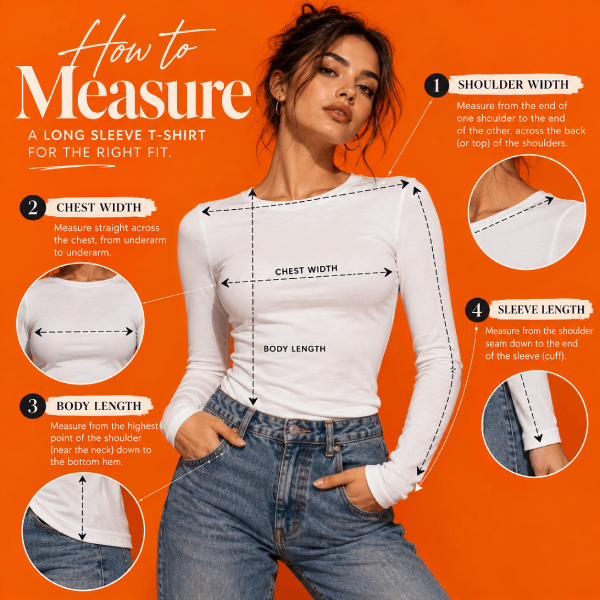
1. Measure the Chest Width
Lay the long sleeve tee flat without stretching it.
Measure straight across the chest from one armpit seam to the other.
This gives you the half-chest measurement. If you want the approximate full circumference, multiply the number by two.
For example, a flat chest width of 52 cm equals approximately 104 cm around the garment.
2. Measure the Body Length
Measure from the highest point of the shoulder, close to the collar, straight down to the bottom hem.
This tells you how long the shirt will sit on your body.
For a classic fit, the tee should usually cover the waistband and finish around the upper-to-mid hip area.
3. Measure the Shoulder Width
Measure straight across the back from one shoulder seam to the other.
This is especially useful if you often find that shirts fit around the chest but feel too narrow or too wide across the shoulders.
With oversized styles, the shoulder seam may intentionally sit lower on the upper arm.
4. Measure the Sleeve Length
Sleeve length is one of the most important measurements for a long sleeve tee.
If the shirt has a clear shoulder seam, measure from that seam down to the end of the cuff.
For a classic fit, the sleeve should normally finish around the wrist bone.
Always check how the store measures sleeve length, because some brands measure from the shoulder while others start from the centre back of the neck.
Should You Measure Your Body or Your Shirt?
Both methods are useful, but they answer slightly different questions.
Body measurements help you understand which size range you belong to.
Garment measurements are better for comparing the actual fit of one shirt with another.
If you already own a long sleeve tee that fits perfectly, using it as your reference is usually the easiest method when shopping online.
Don’t Measure Fabric While Stretching It
This is a common mistake.
Lay the shirt naturally on a flat surface and smooth out wrinkles, but do not pull or stretch the fabric. Stretching can make your measurements inaccurate and may lead you to choose the wrong size.
Check the Intended Fit Before Comparing Sizes
A slim-fit, regular-fit and oversized long sleeve tee can have very different measurements even if all three are labelled size M.
- Slim fit: closer to the body.
- Regular fit: balanced and comfortable.
- Relaxed fit: more room through the chest and waist.
- Oversized fit: intentionally wider and often longer.
Always compare the measurements together with the product’s fit description.
How to Use Your Measurements When Shopping Online
Once you know the measurements of a tee that fits you well, compare them with the product size chart.
For women’s styles, browse our women’s long sleeve T-shirts and compare chest width, body length and sleeve length before choosing your size.
For men’s styles, explore our men’s long sleeve T-shirts and use the same method to find the closest match.
Quick Measurement Checklist
- Lay the tee flat.
- Measure chest from armpit to armpit.
- Measure body length from shoulder to hem.
- Measure shoulder seam to shoulder seam.
- Measure sleeve length to the cuff.
- Compare everything with the product size chart.
Quick Answer
So, how do you measure a long sleeve T-shirt for the right fit? Lay the shirt flat and measure the chest width, body length, shoulder width and sleeve length without stretching the fabric.
The best method is to compare those measurements with a long sleeve tee you already like wearing. That gives you a much better idea of how the new shirt will actually fit than relying only on the size label.













Leave a Reply