
 10.11.2026
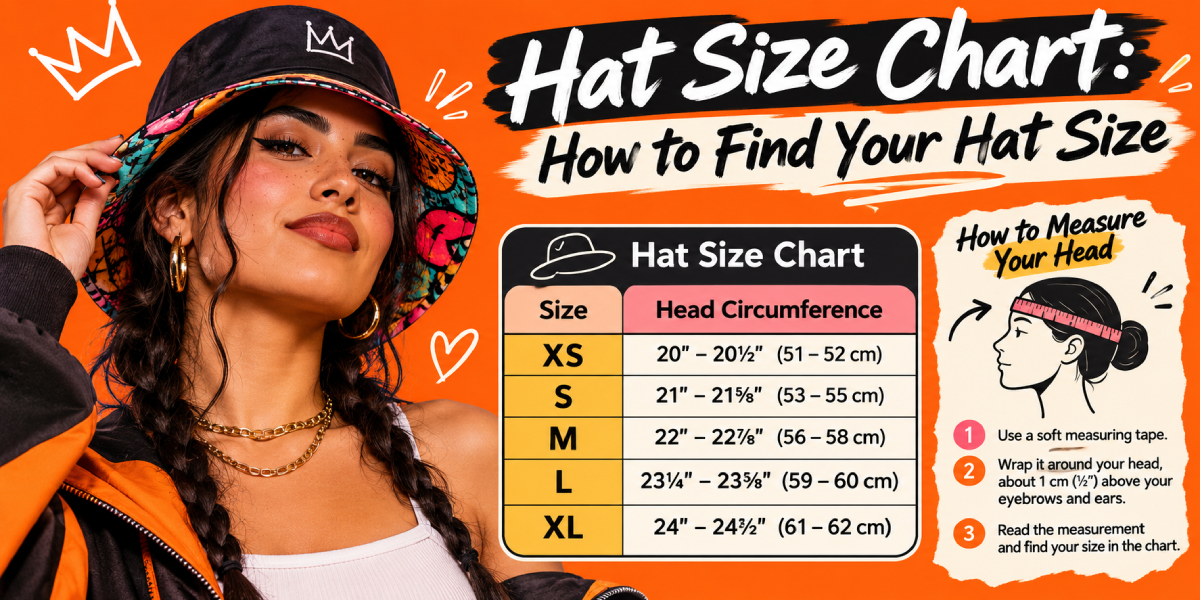
Not sure whether you need a size 56, 58 or 60 hat? You’re not alone. Hat sizing can be confusing, especially when different brands use centimetres, letters or international size systems.
The easiest way to find your hat size is to measure your head circumference in centimetres and compare it with a hat size chart. In many European sizing systems, the number on the hat corresponds approximately to your head circumference.
Use the charts and tips below to find a comfortable fit without guessing.
European Hat Size Chart
In Europe, fitted hat sizes are commonly expressed in centimetres. For example, a size 58 hat is generally designed for a head circumference of approximately 58 cm.
The following chart provides a general adult hat size reference.
| Kopfumfang | EU Hat Size | Approx. Letter Size |
|---|---|---|
| 52–53 cm | 52–53 | XS |
| 54–55 cm | 54–55 | S |
| 56–57 cm | 56–57 | M |
| 58–59 cm | 58–59 | L |
| 60–61 cm | 60–61 | XL |
| 62–63 cm | 62–63 | XXL |
Wichtig: Letter sizes are not standardized. Some brands may classify 58 cm as M/L rather than L. Always check the manufacturer’s own chart.
Hat Size Conversion Chart: EU, UK and US
If you’re shopping internationally, you may encounter UK and US hat sizes instead of centimetres.
These sizes are based on different measuring systems, so conversions are approximate.
| Head Size (cm) | Head Size (inches) | UK Size | US Size |
|---|---|---|---|
| 54 | 21.3 | 6 5/8 | 6 3/4 |
| 55 | 21.7 | 6 3/4 | 6 7/8 |
| 56 | 22.0 | 6 7/8 | 7 |
| 57 | 22.4 | 7 | 7 1/8 |
| 58 | 22.8 | 7 1/8 | 7 1/4 |
| 59 | 23.2 | 7 1/4 | 7 3/8 |
| 60 | 23.6 | 7 3/8 | 7 1/2 |
| 61 | 24.0 | 7 1/2 | 7 5/8 |
| 62 | 24.4 | 7 5/8 | 7 3/4 |
Hinweis: International hat size conversions can vary slightly between manufacturers. Use the brand’s official size chart whenever possible.
How to Measure Your Head for a Hat
Measuring your head takes less than a minute.
- Take a flexible measuring tape marked in centimetres.
- Wrap it around your head approximately 1–2 cm above your eyebrows, following the position where the hat’s inner band will sit.
- Guide the tape above your ears and around the back of your head.
- Keep it comfortably snug without pulling it too tightly.
- Read the measurement and repeat once to confirm the result.
For example, if your head measures 58 cm, start by looking for hats in approximately EU size 58.
No measuring tape? Use a non-stretch string to measure around your head, mark the meeting point, then measure the string against a ruler.

What Hat Size Is 56, 57, 58 or 60 cm?
These are some of the most common questions when shopping for hats.
- 56 cm: Approximately EU 56, often classified as M.
- 57 cm: Approximately EU 57, often classified as M.
- 58 cm: Approximately EU 58, often classified as L.
- 59 cm: Approximately EU 59, often classified as L.
- 60 cm: Approximately EU 60, often classified as XL.
Remember that letter-size classifications vary between brands. Numeric European sizes offer a more direct reference to head circumference.
What If You’re Between Two Hat Sizes?
Suppose your head measures 57.5 cm, but the fitted hat is available only in sizes 57 and 58.
For structured, non-stretch hats, choosing 58 cm is often the more comfortable starting point.
However, the material and shape matter. A stretchy beanie or adjustable baseball cap may offer more flexibility than a rigid fitted hat.
If possible, follow the brand’s specific recommendations for measurements that fall between sizes.
How Should a Properly Sized Hat Fit?
A correctly sized hat should feel secure without causing uncomfortable pressure.
Look for these signs:
- The hat stays in place during normal movement.
- It doesn’t squeeze your forehead or temples.
- It doesn’t constantly slide down over your eyebrows.
- It sits naturally at your preferred height.
- You can wear it comfortably without repeated adjustments.
If the hat matches your head circumference but feels uncomfortable, the crown shape or depth may not suit your head.
Do Baseball Caps and Beanies Use the Same Sizes?
Not always.
Fitted baseball caps often use numeric sizes and require a relatively accurate head measurement.
Adjustable caps usually have a strap or closure that accommodates a range of head circumferences.
Beanies are commonly made from stretchy knitted fabric and may use S/M, L/XL or one-size labels.
Even when a hat is labelled one size, check its recommended circumference range. One size doesn’t necessarily fit everyone.
Does Head Shape Affect Hat Size?
Yes. Head circumference is only one part of the fit.
Some people have rounder head shapes, while others have more oval proportions. Two people with identical head circumferences may find that the same hat feels different.
If a fitted hat feels tight at the front and back but loose at the sides, the crown shape may be the problem rather than the size itself.
Does Hair Affect Your Hat Size?
It can, particularly with thick, curly or voluminous hairstyles.
If you plan to wear your hair underneath your hat, measure with your hair arranged as you would normally wear it.
For very structured hats, bulky hairstyles may require more room. Adjustable caps and stretchy beanies can offer greater flexibility.
Women’s Hat Sizes: Are They Different?
Hat sizing is generally based on head circumference rather than gender.
A 57 cm head circumference is still approximately EU size 57, regardless of whether the hat is marketed to women or men.
However, crown shape, depth, styling and available adjustment may differ between designs.
Explore our women’s accessories and check the measurements of individual hats and accessories before choosing.
Men’s Hat Sizes: What Should You Know?
The same principle applies to men’s hats: measure your head circumference and compare it with the product size chart.
Don’t assume that every men’s cap or beanie uses identical sizing. Adjustable ranges, crown depth and construction can vary considerably.
Entdecke unsere Oversized-T-Shirts für Herren und achte bei der Wahl deiner Passform auf Brustweite, Ärmellänge und die Gesamtproportionen. men’s accessories and look for sizing information specific to the design you like.
Common Hat Sizing Mistakes
- Guessing your size: Measure your head instead of relying on previous purchases.
- Pulling the measuring tape too tightly: This can produce an artificially small measurement.
- Ignoring brand-specific charts: Letter and international sizes can vary.
- Assuming all hats stretch: Many structured hats have little flexibility.
- Forgetting head shape: The correct circumference doesn’t guarantee a comfortable crown fit.
Quick Answer: How to Find Your Hat Size
Measure your head circumference in centimetres around the position where the hat’s inner band will sit. Then compare the result with the manufacturer’s size chart.
In European sizing, a head circumference of 58 cm generally corresponds to hat size 58. If you’re between sizes, consider the larger option for a structured, non-stretch hat, but always follow the brand’s guidance.
The golden rule: Use centimetres as your starting point, check the product-specific sizing information and choose a hat that stays secure without causing pressure.











Schreibe einen Kommentar