
 09.11.2026
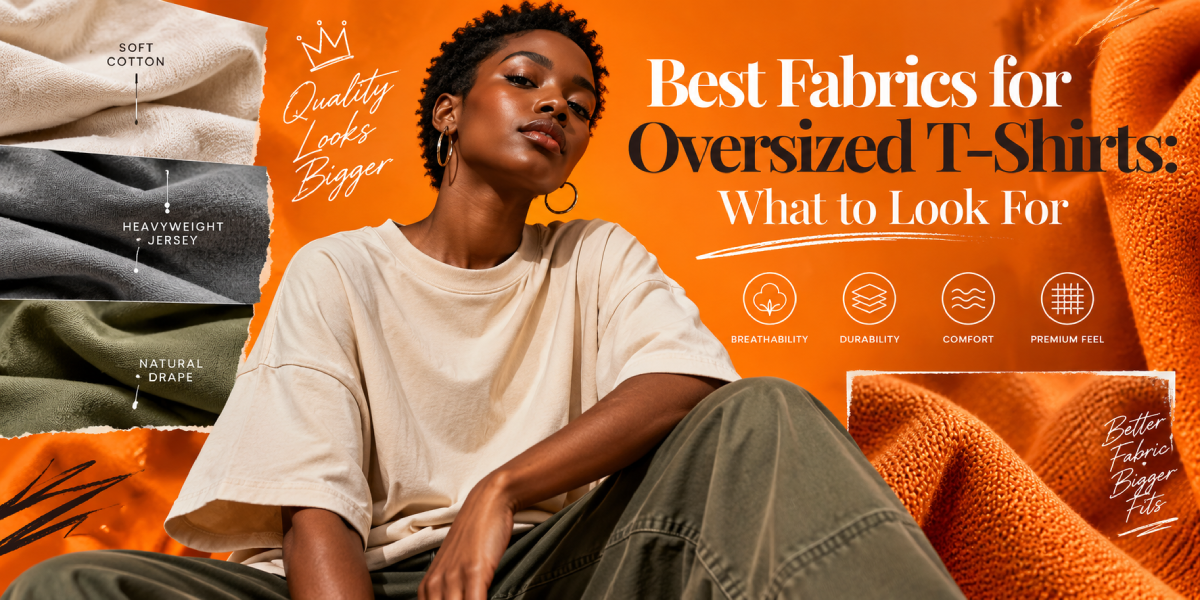
The fabric of an oversized T-shirt can completely change how it looks and feels. Two tees with almost identical cuts might fit very differently simply because one uses thick, structured cotton while the other uses a lightweight, flowing material.
So, what is the best fabric for an oversized T-shirt? For a classic everyday tee, cotton is an excellent starting point. But cotton blends, polyester and other materials can also be good choices depending on whether you prefer structure, softness, breathability or a fluid silhouette.
Here’s how to choose the right fabric without getting lost in technical clothing terminology.
1. Cotton: A Versatile Everyday Choice
Cotton is one of the most popular materials for oversized T-shirts, and for good reason.
It generally feels comfortable against the skin, absorbs moisture and comes in a wide range of fabric weights.
Advantages:
- Usually soft and comfortable.
- Good moisture absorption.
- Available in lightweight and heavyweight versions.
- Works well for casual and graphic T-shirts.
Things to consider: Cotton can shrink if exposed to excessive heat and may take longer to dry than some synthetic fabrics.
Best for: Everyday oversized tees, casual outfits and classic streetwear.
2. Heavyweight Cotton: Best for a Structured Oversized Look
If you love oversized T-shirts that hold their shape rather than collapsing against the body, heavyweight cotton is worth considering.
Thicker cotton jersey often creates a stronger, boxier silhouette with more visible structure through the shoulders and sleeves.
It can also give the garment a substantial, premium-feeling texture.
However, thicker fabric is not automatically higher quality. The yarn, knit construction, finishing and stitching still matter.
Best for: Boxy oversized T-shirts, bold streetwear silhouettes and structured outfits.
3. Cotton-Polyester Blends: A Practical Balance
Cotton-polyester blends combine characteristics of natural and synthetic fibres.
Depending on the blend ratio and construction, these fabrics may offer:
- improved resistance to wrinkling;
- faster drying than pure cotton;
- good everyday durability;
- a softer or more stable fit.
A blend is not automatically better or worse than 100% cotton. A well-made cotton-polyester tee can be more practical for everyday use, while a pure cotton tee may offer a more traditional cotton feel.
Best for: Easy-care oversized T-shirts and regular everyday wear.
4. Polyester: Lightweight and Quick-Drying
Polyester is a synthetic fibre commonly used in sportswear and casual clothing.
It generally absorbs less moisture than cotton and can dry relatively quickly. It is also often resistant to wrinkling and shrinking under suitable care conditions.
However, polyester can feel less breathable in some constructions and may retain odors more noticeably than cotton.
Its comfort depends heavily on fabric construction, thickness and finishing.
Best for: Lightweight oversized tees, sports-inspired outfits and easy-care clothing.
5. Viscose, Modal and Lyocell: Soft and Fluid
These regenerated cellulosic fibres can create a noticeably softer, more flowing oversized silhouette.
Instead of holding a wide boxy shape, fabrics made with these fibres often fall closer to the body’s natural lines.
They can feel smooth and comfortable, making them attractive for relaxed, draped designs.
The main consideration is care: some garments containing these fibres are more sensitive to washing, stretching or distortion when wet.
Best for: Soft oversized T-shirts with a relaxed, fluid drape.
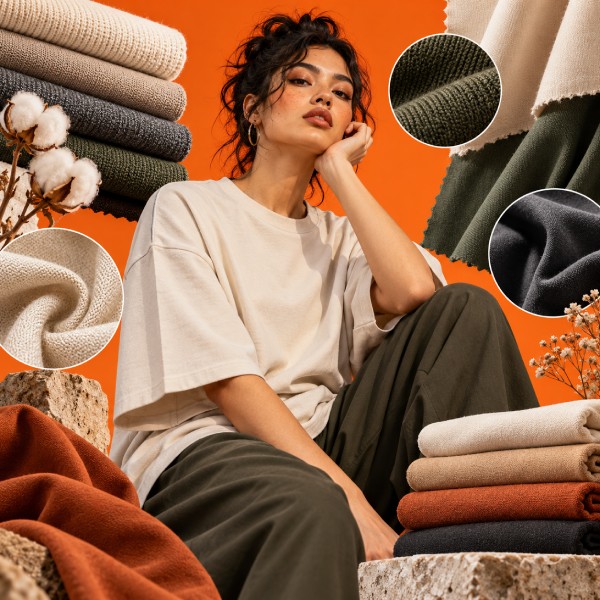
Oversized T-Shirt Fabric Comparison
Here’s a quick guide to the most common options.
| Fabric | Typical Feel | Best For |
|---|---|---|
| Cotton | Soft, natural, versatile | Everyday oversized tees |
| Heavyweight cotton | Thicker, more structured | Boxy streetwear silhouettes |
| Cotton-polyester blend | Varies by blend; often easy-care | Practical everyday wear |
| Polyester | Often lightweight, quick-drying | Sporty and lightweight styles |
| Viscose, modal or lyocell | Smooth, soft, flowing | Draped oversized silhouettes |
These are general tendencies, not guarantees. Two fabrics made from the same fibre can behave differently depending on how they are knitted and finished.
What Is GSM in T-Shirt Fabric?
When comparing oversized T-shirts, you may see the term GSM. It stands for grams per square metre and describes the weight of the fabric.
For example, a fabric weighing 220 GSM weighs 220 grams per square metre.
Higher GSM generally indicates a heavier fabric, although it does not automatically mean better quality.
Oversized T-Shirt GSM Guide
| Fabric Weight | General Feel | Typical Use |
|---|---|---|
| 120–160 GSM | Lightweight | Airy tees and warm-weather outfits |
| 160–200 GSM | Medium weight | Versatile everyday T-shirts |
| 200–250 GSM | Heavyweight | Structured oversized tees |
| 250+ GSM | Very heavyweight | Substantial boxy streetwear styles |
These ranges are approximate. Fabric construction affects how heavy, flexible or structured a material feels.
Is Thick or Thin Fabric Better for Oversized T-Shirts?
Neither is universally better. The right choice depends on the silhouette you want.
Choose thicker fabric if you prefer:
- a more structured, boxy shape;
- substantial fabric that holds volume;
- a heavier streetwear feel.
Choose lighter fabric if you prefer:
- more movement and drape;
- less fabric weight on the body;
- easy layering in warmer conditions.
Keep in mind that lightweight fabric is not always more breathable, and heavyweight fabric is not automatically uncomfortable. Fibre content and knit construction also influence comfort.
Which Fabric Is Best for Printed Oversized T-Shirts?
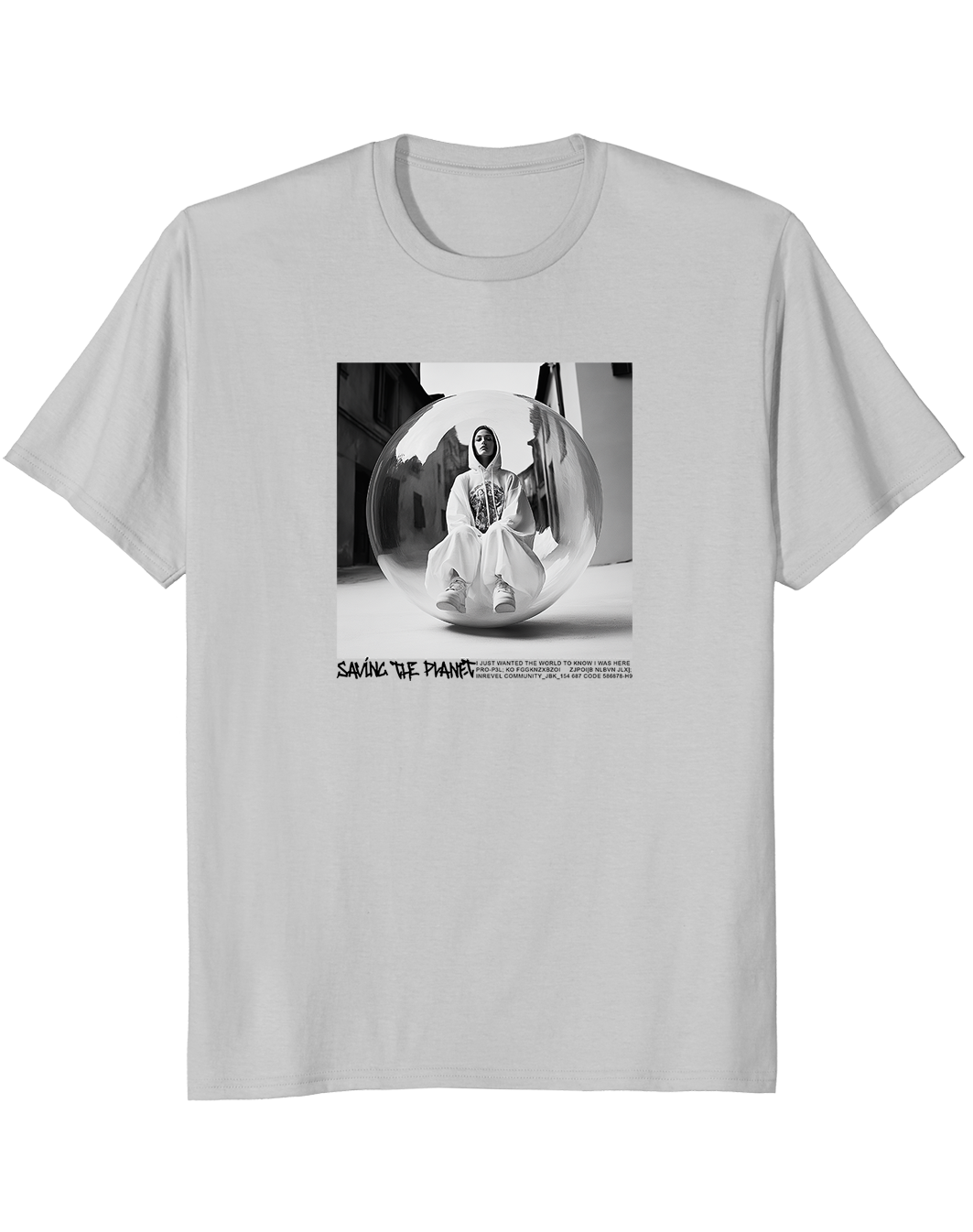
If you love graphic T-shirts, fabric choice can affect how a print looks and feels.
Smooth, tightly knitted cotton surfaces are often well suited to many printing methods, while some polyester garments require different printing processes.
The best choice depends on the print technology, fabric colour, surface texture and finishing.
For a printed oversized tee, look for a comfortable fabric with a stable surface and follow the garment’s washing instructions to protect the design.
How to Recognize Good T-Shirt Fabric
When shopping online or examining a T-shirt in person, pay attention to more than the material name.
- Fabric composition: Check whether the tee is cotton, polyester or a blend.
- Weight: Look for GSM information when available.
- Surface: A smooth, consistent knit can indicate careful fabric production.
- Opacity: Consider whether the fabric is sufficiently opaque for your preference.
- Recovery: The neckline and fabric should return reasonably well after gentle stretching.
- Care requirements: Choose material you can realistically maintain.
Also check the stitching and construction. Even excellent fabric cannot compensate for poorly finished seams or an unstable neckline.
Best Fabrics for Women’s Oversized T-Shirts
For a softer, flowing silhouette, lightweight cotton, modal blends or other drapey fabrics may be appealing.
If you prefer a boxy streetwear look, medium-weight or heavyweight cotton can help create more structure.
Explore our women’s oversized T-shirts and check individual product descriptions for material composition and fit details.
Best Fabrics for Men’s Oversized T-Shirts
For a structured oversized silhouette, medium-weight and heavyweight cotton are useful starting points.
Cotton blends can also work well for everyday wear, especially when easy care and shape retention are priorities.
Browse our men’s oversized T-shirts and compare the fabric, fit and garment measurements before choosing.
Quick Answer: What’s the Best Fabric for an Oversized T-Shirt?
For most everyday oversized T-shirts, cotton is an excellent all-round choice. Heavyweight cotton is particularly useful for a structured, boxy silhouette, while lighter cotton and softer cellulosic fabrics offer more drape.
Cotton-polyester blends can provide practical easy-care advantages, and polyester can be useful for lightweight, quick-drying styles.
The most important takeaway: Don’t choose an oversized T-shirt based only on the fibre name or GSM. Consider how the fabric feels, hangs, holds its shape and fits your everyday needs. The best fabric is the one that creates the silhouette you actually want to wear.






Leave a Reply