
 09.11.2026
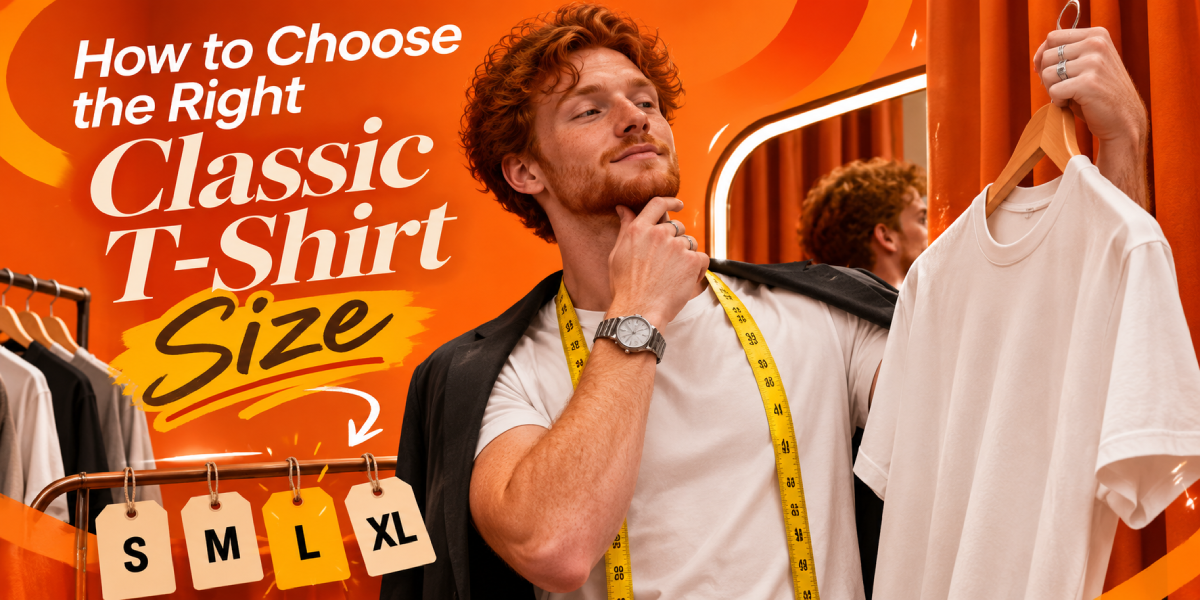
Finding the right classic T-shirt size should be simple. Yet an M from one brand can fit like an L from another, and two T-shirts with identical labels can have very different proportions.
The best way to choose your classic T-shirt size is to compare your body measurements and a T-shirt you already like with the product’s size chart. Don’t rely on the size letter alone.
Here’s a simple guide to getting the fit right, especially when shopping online.
1. Understand How a Classic T-Shirt Should Fit
Before choosing a size, it helps to know what you’re looking for.
A classic fit T-shirt should generally have:
- Natural shoulders: Shoulder seams close to the ends of your shoulders.
- Comfortable chest room: Enough space to move without pulling.
- A relatively straight body: Fabric that falls naturally rather than hugging the waist.
- Regular sleeves: Comfortable around the upper arms.
- Balanced length: A hem that usually falls below the waistband, around the hips.
If you want a very close-fitting silhouette, a slim fit may suit you better. If you prefer dropped shoulders and substantial extra width, consider an oversized cut.
2. Measure Your Chest Correctly
Chest circumference is one of the most useful body measurements for choosing a T-shirt size.
You’ll need a flexible measuring tape.
- Stand naturally with your arms relaxed.
- Wrap the tape around the fullest part of your chest or bust.
- Keep it level across your back.
- Make sure it sits comfortably without squeezing your body.
- Record the result in centimetres.
For example, if your chest circumference is 100 cm, look for the size range that includes this measurement in the manufacturer’s body size chart.
Do not confuse your body circumference with the actual T-shirt circumference. A classic tee needs additional room for comfort and movement.
3. Understand Body Measurements vs Garment Measurements
This is where many online sizing mistakes happen.
Some size charts describe the person’s body, while others describe the finished T-shirt.
They are not interchangeable.
| Measurement | What It Means | Example |
|---|---|---|
| Body Chest | Circumference around your chest | 100 cm |
| Garment Chest Circumference | Distance around the finished T-shirt | 110 cm |
| Flat Garment Chest Width | Distance from armpit to armpit when laid flat | 55 cm |
These are illustrative measurements, not a universal sizing standard.
In this example, the T-shirt has approximately 10 cm of chest ease — the difference between the garment and body circumferences.
4. Measure a T-Shirt You Already Own
If you have a classic T-shirt that fits well, it can be your most useful sizing reference.
Lay it flat on a table without stretching the fabric.
Measure the following:
- Chest width: Straight across from armpit to armpit.
- Body length: From the highest shoulder point to the bottom hem.
- Shoulder width: From one shoulder seam to the other.
- Sleeve length: From the shoulder seam to the sleeve opening.
Compare these measurements with the new T-shirt’s garment size chart.
If your favourite tee measures 54 cm across the chest and 71 cm in length, look for similar measurements if you want a comparable fit.

5. Check the Shoulder Fit
Classic T-shirts usually have shoulder seams positioned close to the natural shoulder points.
If the seams sit too far inward, the shirt may pull across your upper body.
If they fall significantly down your arms, the tee may be too large or designed with a more relaxed cut.
Shoulder fit is particularly important because changing the size also affects sleeve position and how the entire garment hangs.
6. Don’t Ignore T-Shirt Length
A T-shirt can fit perfectly around the chest but still feel too short or too long.
A classic tee generally extends below your waistband and finishes somewhere around the hips.
The ideal length depends on your height and torso proportions. That’s why checking the garment’s actual length is more useful than using height alone to select a size.
Tip: If the width fits well but the T-shirt is too long, look for a different cut rather than automatically sizing down.
7. What If You’re Between Two Sizes?
Being between sizes is common, and there is no single answer that works for everyone.
Use these simple guidelines:
- Choose the larger size if the smaller one would feel restrictive around the chest, shoulders or arms.
- Choose the smaller size if both allow comfortable movement and you prefer less excess fabric.
- Compare the lengths before deciding, because sizing up often adds body and sleeve length.
- Check the fabric, especially if the T-shirt has little stretch or may shrink during washing.
If neither size offers the proportions you want, another cut may work better.
8. Does Fabric Affect T-Shirt Sizing?
Yes. Two classic T-shirts with identical measurements may feel different because of their materials.
Cotton: Often comfortable and breathable, but some cotton garments can shrink if exposed to excessive heat.
Cotton-polyester blends: May offer improved dimensional stability, depending on the blend and construction.
Stretch fabrics: T-shirts containing elastane may feel more flexible during movement.
Always check the product’s fabric composition and care instructions rather than assuming every material behaves the same way.
9. How to Choose Women’s Classic T-Shirt Size
For women’s classic tees, measure around the fullest part of your bust and compare the result with the product’s body size chart.
Then check the finished garment width and length to make sure the silhouette matches your preference.
Some classic T-shirts have a relatively straight body, while others include subtle waist shaping.
Explore our women’s classic T-shirts and compare individual measurements to find a comfortable everyday fit.
10. How to Choose Men’s Classic T-Shirt Size
For men’s classic tees, chest circumference is a useful starting point, but shoulder width and body length are equally worth checking.
A good classic fit should provide comfortable room through the chest and waist without looking excessively baggy.
Browse our men’s classic T-shirts and use the product’s measurements to choose the size that matches your preferred silhouette.
Common T-Shirt Sizing Mistakes
Avoid these common problems when ordering online:
- Choosing only by S, M or L: Size labels aren’t identical across brands.
- Confusing body and garment measurements: The numbers describe different things.
- Ignoring shoulder width: A correct chest size doesn’t guarantee a good shoulder fit.
- Forgetting about length: Extra width isn’t the only difference between sizes.
- Assuming sizing up improves every problem: A different cut may be the better solution.
Quick Answer: How to Choose the Right Classic T-Shirt Size
To choose the right classic T-shirt size, start by measuring your chest and comparing it with the manufacturer’s size chart. Then measure a T-shirt you already like and compare the garment’s chest width, shoulder width and body length.
If you’re between sizes, prioritize comfortable movement and the overall proportions rather than automatically choosing the larger option.
The golden rule: The best classic T-shirt size is the one that gives you natural shoulders, comfortable chest and waist room, balanced length and easy movement — not simply the size letter you usually buy.













Leave a Reply